
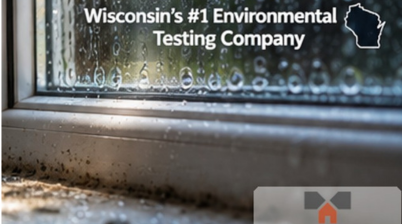
The Short Answer
Most Wisconsin home inspector check for Mold do not perform certified laboratory mold testing as part of a standard home inspection. Inspectors may identify visible staining, suspected microbial growth, moisture intrusion, or conditions that promote mold, but sample collection and laboratory analysis are separate environmental services.
Tri County Inspection & Environmental offers third-party reviewed and certified mold testing along with radon, asbestos, and lead paint certified sampling. Our approach is designed to answer three practical questions: Is there evidence of mold growth? Where is moisture coming from? What next steps are appropriate?
Why Mold Testing is Different From a Standard Home Inspection
A home inspection visually assesses readily accessible systems and components. It is not a guarantee that concealed mold is absent. Mold assessment can include a targeted visual investigation, moisture measurements, air samples, tape lifts, and swabs, selected according to the building and the concern. No single test identifies every concealed problem.
Mold spores are present outdoors and routinely enter buildings. Their presence alone does not prove a problem. The concern is persistent indoor moisture, visible growth, or evidence suggesting an indoor source. The EPA does not set a universal safe or unsafe numerical threshold for airborne mold spores.
Ten Reasons to Consider Mold Assessment
1. Musty odors: Persistent odors can indicate damp or concealed materials.
2. Past basement seepage: Even a dry-looking basement may have a history of wet finishes.
3. Visible discoloration: Suspected growth on drywall, framing, or trim warrants evaluation.
4. Roof or attic leaks: Leaks, condensation, and poor ventilation can wet roof sheathing.
5. Plumbing leaks: Cabinets, wall cavities, and floors may remain damp after repairs.
6. Flooding or sewer backups: Wet porous materials may need more than surface cleaning.
7. High indoor humidity: Humidity and condensation can support mold growth.
8. HVAC moisture concerns: Condensate leaks or damp ducts deserve targeted investigation.
9. Recent water-damage repairs: Fresh finishes can conceal unresolved moisture.
10. Buyer uncertainty: An independent assessment can help clarify the scope before closing.
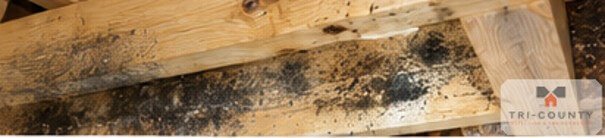
How does Tri County test for mold?
Testing is tailored to the property rather than following a rigid sample count. Depending on conditions and access, the assessment may involve the following ten steps:
1. Client interview: Review leaks, odors, renovations, and occupant concerns.
2. Visual inspection: Document suspect materials, staining, and moisture pathways.
3. Moisture mapping: We utilize appropriate moisture detection equipment and thermal imaging technology to identify areas of elevated moisture within the home.
4. Humidity and temperature readings: Evaluate conditions that favor condensation.
5. HVAC and ventilation review: Consider condensation, filtration, and air movement.
6. Outdoor reference sample: When appropriate, establish a comparison for indoor air.
7. Indoor air sampling: Sample representative rooms or targeted areas of concern.
8. Surface tape-lift sampling: Collect material samples from areas of visible suspected microbial growth for analysis by a certified laboratory.
9. Surface swab sampling: Sample selected surfaces when the method suits the question.
10. Laboratory review and recommendations: Interpret findings with building conditions and suggest next steps based on the certified third-party lab report.
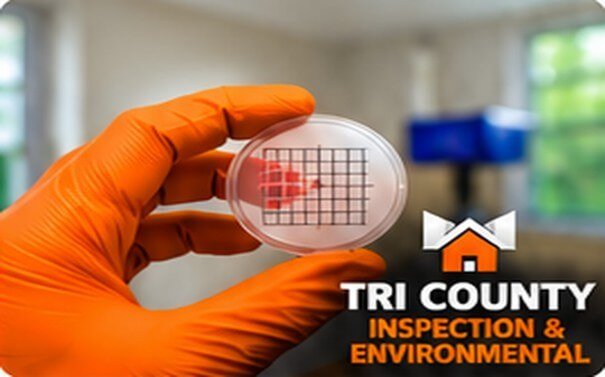
What mold types are common, and which findings deserve closer attention?
No scientifically valid list of five universally harmless molds versus five universally dangerous molds exists. Any mold growing indoors, and even common outdoor spores, can cause allergy symptoms in susceptible people. Species identification alone does not diagnose illness.
| Often detected in background air | Why interpretation still matters |
| Cladosporium | Common outdoors; elevated indoor levels or growth on wet surfaces warrant investigation. |
| Basidiospores | Often originate outdoors; some fungi can also be associated with wood decay. |
| Ascospores | A broad category; the specific type and moisture conditions matter. |
| Alternaria | Often outdoors but can grow indoors and trigger allergies. |
| Epicoccum | Frequently outdoor-associated; interpret relative to conditions and comparison samples. |
Findings that may be associated with water-damaged building materials include Stachybotrys chartarum, Chaetomium, Ulocladium, Fusarium, and certain Aspergillus/Penicillium groups. They warrant evaluation in context, but no one spore type or count automatically establishes a health diagnosis or a remediation scope.
Source: CDC — Mold: health effects and prevention
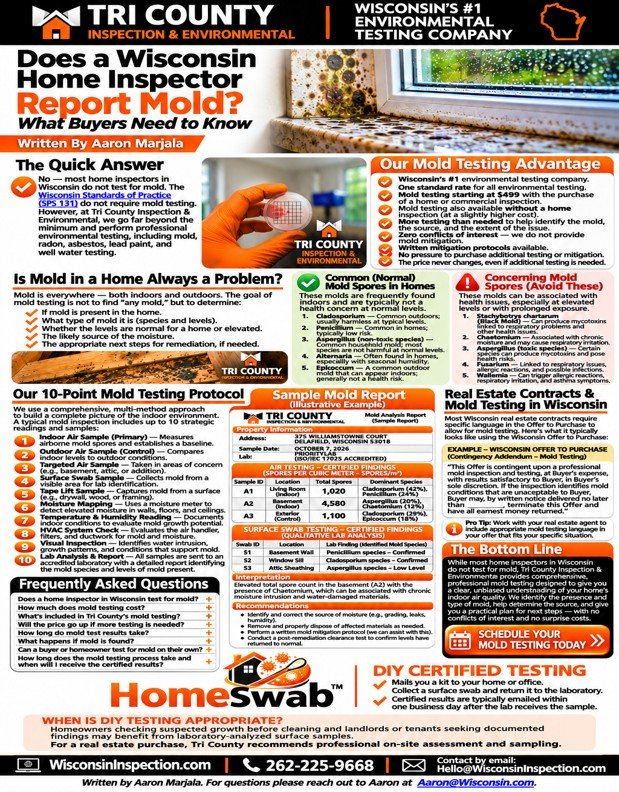
A third-party laboratory Mold Report from Tri County Inspection & Environmental illustrates why relying on a single mold air sampling result can be misleading. Three indoor air samples collected from a basement game room, basement utility room, and second floor hallway were classified by the laboratory as NORMAL, with total concentrations of 420, 200, and 500 spores/m³, respectively. The outdoor comparison sample measured 380 spores/m³. However, a fourth indoor air sample collected from the first floor living room measured 990 spores/m³ and was classified as a PROBLEM, with elevated Penicillium/Aspergillus concentrations of 938 spores/m³. The takeaway: normal mold air sampling results in one area of a home do not rule out elevated mold concentrations or potential mold growth elsewhere in the property.
| Sample type | Reported finding | What it means |
| Indoor air — three areas | 160 / 170 / 340 spores/m³ | Airborne results require context; not a universal safety clearance. |
| Outdoor control | Approximately 1,100 spores/m³ | A comparison point, not a regulatory limit. |
| Attic surface tape lifts | Growth indicated | Evaluate moisture and ventilation conditions. |
| Interior surface swab | Growth indicated | Investigate the source and affected material. |
Laboratory terms: ‘raw count’ is the number observed on the sample; ‘spores/m³’ estimates airborne concentration; ‘percent of total’ shows the relative share of each reported group. ‘Present’ on a surface sample means fungal material was observed—not that an airborne exposure limit was exceeded.
Sample report infographic
The visual guide below summarizes the questions Wisconsin homebuyers ask about mold testing, sample air and swab findings, DIY options, and inspection contingencies. The full article provides selectable, searchable text and authoritative source links; the graphic is illustrative and is not a certified laboratory report.
How much does mold testing cost?
Tri County mold testing starts at $499 when purchased with a residential or commercial inspection. Standalone mold testing is available and priced at $699.
Tri County’s stated pricing policy is to quote one agreed price for the defined assessment; if the inspector determines that additional samples are needed within that assessment, the price does not increase. Confirm the scope and written quote when scheduling.
Tri County does not sell mold remediation services. This separation helps avoid a financial incentive to recommend unnecessary cleanup. When appropriate, we can assist with a written remediation protocol, while the actual remediation work is performed by a separate contractor.
Does a Wisconsin offer to purchase automatically include mold testing?
Not necessarily. The Wisconsin WB-11 Residential Offer to Purchase contains inspection-related provisions, but buyers should not assume those provisions authorize invasive investigation, air sampling, or surface testing. Mold-related contingencies and access permissions should be discussed with the buyer’s real estate agent and, when appropriate, a Wisconsin real estate attorney before an offer is submitted.
“This Offer is contingent upon Buyer’s opportunity, at Buyer’s expense, to obtain a mold and moisture assessment by a qualified environmental testing professional within days after acceptance. Seller shall provide reasonable access for the agreed non-destructive assessment and sampling. If the assessment identifies conditions unacceptable to Buyer, Buyer may exercise the rights expressly provided in the parties’ negotiated contingency.”
Any deadline, notice procedure, access authorization, repair right, and termination remedy must be drafted to fit the actual transaction. The sample above does not itself establish those remedies.
Source: Wisconsin REALTORS® Association — legal and forms resources
Frequently Asked Questions
Does Every Wisconsin Home Inspector Test for Mold?
No. Not every Wisconsin home inspector offers mold testing, and mold testing is not required as part of a standard residential home inspection.
Tri County Inspection home inspectors perform visual evaluations of accessible areas of a property in accordance with Wisconsin’s home inspection standards. While an inspector may identify visible suspected mold growth, moisture intrusion, or conditions conducive to microbial growth, laboratory mold testing is a separate service.
At Tri County Inspection & Environmental, we offer professional mold inspections and testing throughout Southeastern Wisconsin. Our services include moisture detection, thermal imaging, air sampling, and surface sampling of suspected microbial growth. Samples are submitted to an independent third-party laboratory for certified analysis.
Why is mold testing important? Mold growth is often associated with elevated moisture, plumbing leaks, basement water intrusion, or inadequate ventilation. Identifying moisture concerns and evaluating suspected microbial growth can help homeowners and buyers make informed decisions about a property’s condition.
Under Wisconsin Administrative Code SPS 131, inspectors are not required to test for mold or other hazardous substances as part of a standard home inspection.
Can Mold Be Present in a Home Even if Air Sampling Results Are Normal?
Yes. Mold can be present in a home even when indoor air sampling results show low or normal mold spore levels. Mold growth may be localized to specific surfaces or concealed within wall cavities, beneath flooring, above ceilings, or in other areas where airborne spores are not readily detected during testing.
Mold air sampling measures airborne fungal spores at a specific location and point in time. Results can vary depending on ventilation, humidity, airflow, and environmental conditions. Consequently, a normal mold air sample does not guarantee that a home is free of mold growth.
At Tri County Inspection & Environmental, our Wisconsin mold inspection and testing services may include visual evaluations, moisture detection, thermal imaging, air sampling, and surface sampling of suspected microbial growth.
The bottom line: Mold air testing is a valuable inspection tool, but it should not be relied upon as the sole method of identifying mold concerns. A comprehensive mold inspection considers both laboratory results and the moisture conditions within the home.
Does Black Colored Mold Automatically Mean Stachybotrys (Black Mold)?
No. Not all black colored mold is Stachybotrys, commonly referred to as toxic black mold. Mold comes in many colors, including black, green, white, gray, and brown. The color of mold does not reliably identify its species or determine whether it poses a health concern.
The term “black mold” is a general description, not a scientific classification or specific mold species. Although Stachybotrys chartarum is commonly associated with the term, many other mold species can also appear black or dark in color.
At Tri County Inspection & Environmental, we recommend laboratory analysis of suspected microbial growth when identification is needed. Professional mold testing can help identify the types of mold present, while moisture detection equipment and thermal imaging can assist in locating moisture conditions that may contribute to mold growth.
The bottom line: Just because mold is black does not mean it is Stachybotrys. Mold identification requires appropriate laboratory analysis, not visual appearance alone.
Should All Visible Mold Growth in a Home Be Tested?
No. Not all visible mold growth requires laboratory testing. According to the U.S. Environmental Protection Agency (EPA), when visible mold growth is present, laboratory testing is often unnecessary to determine whether mold cleanup and moisture correction are needed.
However, professional mold testing can provide valuable information when identifying the types of mold present, investigating suspected hidden mold growth, or documenting conditions during a real estate transaction.
At Tri County Inspection & Environmental, our Wisconsin mold inspection and testing services include visual evaluations, moisture detection, thermal imaging, and collection of surface and air samples when appropriate. Samples are submitted to an independent laboratory for analysis.
Can a Buyer or Homeowner Test for Mold on Their Own?
Yes. HomeSwab offers direct-to-consumer DIY mold surface testing kits. A kit is mailed to the customer, who collects a surface swab and sends it to the laboratory for analysis. Certified laboratory results are typically emailed within one business day after the laboratory receives the swab samples; actual turnaround may vary. HomeSwab can be useful for homeowners checking a suspected mold surface before cleaning, and for landlords or tenants seeking documented laboratory findings during a dispute. Laboratory findings alone do not establish responsibility or resolve a landlord-tenant dispute. For a residential or commercial real estate purchase, Tri County recommends an assessment and sampling by a Tri County Inspection & Environmental professional rather than relying solely on a DIY kit.
How Long Does the Mold Testing Process Take, and When Will I Receive the Certified Results?
Once the laboratory receives the samples, certified mold testing results are typically available within as little as 24 hours (1 business day), providing homeowners with timely, independent laboratory findings following their environmental inspection. Depending on the amount and type of testing, laboratory processing and certification may take up to two business days. The certified laboratory results are emailed immediately after the laboratory finalizes them. Collection, shipping, weekends, and holidays can affect the overall time from inspection to delivery.
Who Should Perform Mold Remediation?
Mold remediation should be performed by a qualified mold remediation contractor experienced in identifying moisture sources, establishing appropriate containment, safely removing mold-contaminated materials, and preventing future mold growth.
Tri County Inspection & Environmental of Wisconsin specializes in independent mold inspections and mold testing. We do not perform mold remediation or mold removal services. By keeping mold testing and remediation separate, we eliminate the financial conflict of interest that can arise when the same company both identifies a mold problem and profits from correcting it. This ensures our findings and recommendations remain independent and unbiased.
Following mold remediation, we recommend independent third-party post-remediation mold testing to help verify that the cleanup was effective and that the affected areas are suitable for normal occupancy. Having a separate mold testing company evaluate the completed work provides an additional layer of quality assurance and helps protect homeowners from incomplete remediation.
For homeowners throughout Southeastern Wisconsin, independent mold testing before and after remediation offers greater transparency, accountability, and confidence in the results.
What Should Homeowners Do Next?
If you suspect mold in your home or have recently completed mold remediation, schedule an independent mold inspection or mold testing with Tri County Inspection & Environmental of Wisconsin. Our testing services help homeowners better understand potential mold concerns, document laboratory findings, and evaluate conditions following remediation.
Visit Tri County Inspection & Environmental to learn more about our mold testing services and schedule an appointment in Southeastern Wisconsin.
Source: U.S. EPA — A Brief Guide to Mold, Moisture and Your Home
The bottom line
For Wisconsin buyers, the best question is not simply whether mold is present, but whether there is evidence of indoor growth, what moisture source is responsible, what testing is needed, and whether action to remove the mold is justified. Tri County Inspection & Environmental combines property inspection experience with environmental sampling and independent third-party recommendations without selling remediation.
By Aaron Marjala
Schedule mold testing: WisconsinInspection.com | 262-225-9668
Aaron can be reached via e-mail at: Hello@WisconsinInspection.com