
Mold is one of the most common worries for home buyers, and for good reason. It can damage building materials, it usually points to a moisture problem, and it can affect indoor air quality. So, when buyers schedule a home inspection, one of the first questions they ask is whether the inspector will check for mold.
The answer is more nuanced than a simple yes or no. Here is what a Wisconsin home inspection covers when it comes to mold, what it does not, and when it makes sense to add mold testing before you buy.
The Short Answer
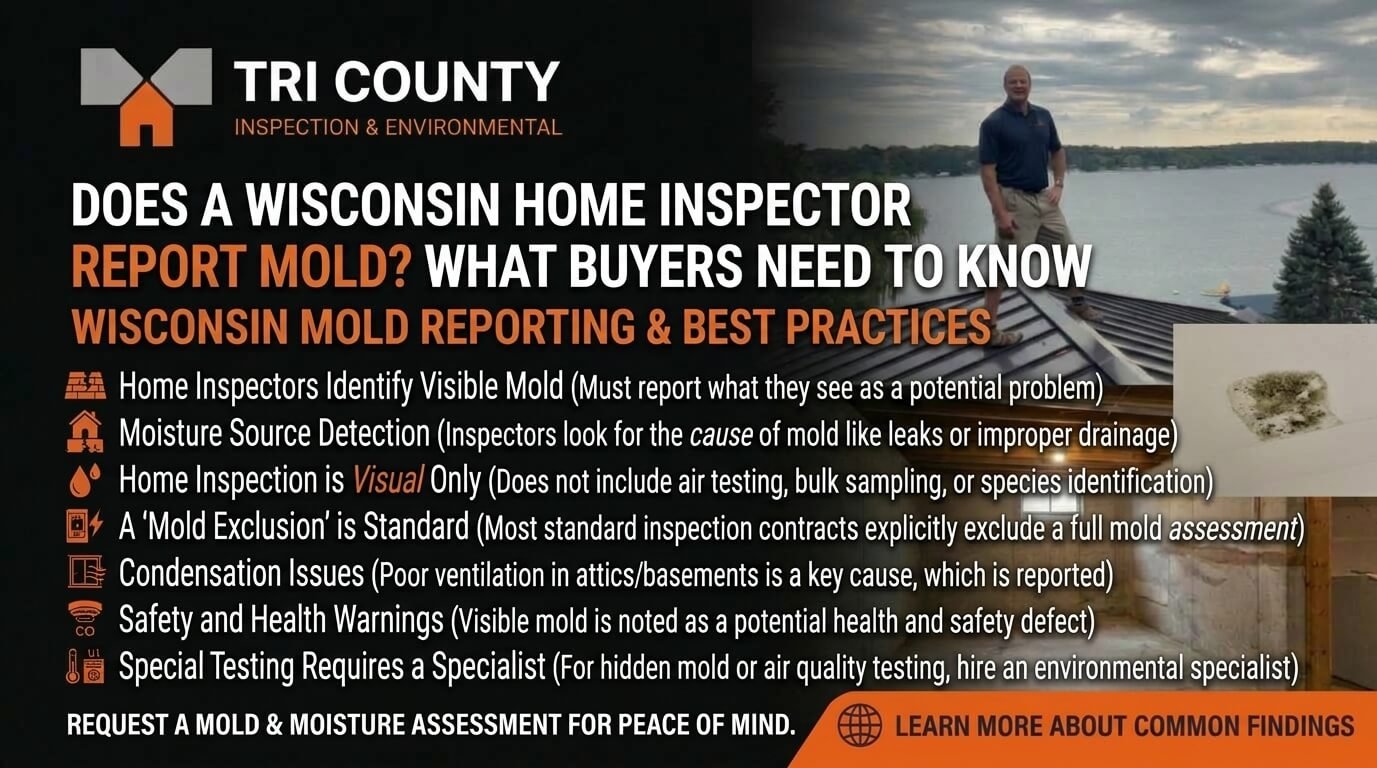
A standard Wisconsin home inspection is not a mold inspection. Inspectors are not required to test for mold or identify it. They are required to report visible signs of water penetration, leaks, and abnormal condensation, which are the conditions that cause mold. A good inspector will also note any visible suspected mold growth and recommend further evaluation. If you want to know whether mold is present, what type it is, and how widespread it may be, you need separate mold testing. Does a Home Inspector Check for Mold in Wisconsin?
What Wisconsin Rules Require an Inspector to Report
Wisconsin home inspectors are licensed and follow the standards of practice in Wisconsin Administrative Code SPS 131.32. Those standards do not mention mold by name, but they do require the inspector to describe signs of leaks or abnormal condensation on building components, and signs of water penetration into the building.
At the same time, Wisconsin’s home inspector statute, Wis. Stat. § 440.975, says an inspector is not required to inspect for the presence of hazardous substances, or for pests and wood-damaging organisms. In practice, that means moisture is inside the scope of a standard inspection, while confirming and identifying mold is outside it.
That is why the inspection and mold testing work best together: the inspection finds the water, and testing answers the question of what that water has caused.
What a Home Inspector Looks For
Even though mold testing is a separate service, an experienced inspector spends a lot of the inspection looking for the conditions that lead to it. These include:
- Water stains on ceilings, walls, and basement floors
- Efflorescence (white mineral deposits) and dampness on foundation walls
- Active leaks under sinks, around toilets and at the water heater
- Roof leaks, damaged flashing and signs of ice dam damage
- Frost, staining, or dark discoloration on attic sheathing
- Bathroom fans that are missing or vent into the attic
- Grading, gutters, and downspouts that direct water toward the foundation
- Musty odors and visible growth that may be mold
When an inspector sees visible growth or strong signs of moisture, the report will describe what was observed, where, and recommend further evaluation.
Where Mold Hides in Wisconsin Homes
Wisconsin’s climate creates a few predictable trouble spots. Long, cold winters, humid summers, and spring snowmelt all add moisture to a house at different times of year.
Basements and crawlspaces
Below-grade spaces are the most common place to find mold in Wisconsin homes. Spring thaw and heavy rain can push water through foundation walls, and summer humidity condenses on cool concrete. Finished basements deserve extra attention because drywall and carpet can hide moisture behind them.
Attics
In winter, warm, moist air that leaks into the attic condenses on the cold underside of the roof deck. Over time, poor ventilation, thin insulation, and bathroom fans venting into the attic can lead to frost, staining, and mold growth on the sheathing.
Bathrooms, kitchens, and windows
Showers, cooking, and drying laundry all add moisture to indoor air. Without working exhaust fans, that moisture ends up on walls, ceilings, and window frames, especially on single-pane or older windows in cold weather.
Behind walls and under floors
Slow plumbing leaks can go unnoticed for months. Soft flooring around toilets, stained cabinet bases, and bubbling paint are common clues.
Moisture problems are among the most common issues found during Wisconsin home inspections, which is why they get so much attention during an inspection.
Home Inspection vs. Mold Testing
| Standard home inspection | Mold testing | |
| Purpose | Evaluate the home’s readily accessible systems and components | Determine whether mold is present and how widespread it may be |
| Covers moisture | Yes: leaks, water penetration, abnormal condensation | Focused on areas of concern |
| Identifies mold | No; notes visible suspected growth | Yes, with sampling and lab analysis |
| Air quality | Not evaluated | Air sampling can compare indoor and outdoor levels |
| When to use | Every home purchase | Visible growth, musty odors, past water damage, health concerns |
When Buyers Should Add Mold Testing
Not every home needs mold testing. It is worth adding to your inspection when any of the following apply. Mold testing can usually be scheduled at the same time as your inspection, so results arrive within your contingency period.
- You notice a persistent musty or earthy smell, especially in the basement
- The seller disclosed past water damage, flooding, or a wet basement
- The basement was recently finished, painted, or carpeted with no clear explanation
- The home has been vacant or closed up for a long time
- The inspection finds active leaks, ongoing moisture, or visible suspected growth
- Someone in your household has allergies, asthma, or other respiratory sensitivities
The U.S. Environmental Protection Agency notes that when mold growth is clearly visible, sampling is often unnecessary, because the priority is cleaning it up and fixing the moisture source. Testing is most useful when you suspect hidden mold, when there is an odor but no visible source, or when you want to confirm an area was properly cleaned after remediation.
What to Do If Mold Is Found
Finding mold does not have to end a purchase. What matters is the cause, how much there is, and what it will take to correct it.
1. Find and fix the moisture source first. According to the EPA, the key to mold control is moisture control. Cleaning mold without fixing the leak, drainage, or ventilation problem means it will return.
2. Understand the size of the problem. The EPA guidance says many small areas, under about 10 square feet, can often be handled by a homeowner, while larger areas or significant water damage call for a professional.
3. Get quotes from qualified contractors. A remediation contractor can scope the cleanup, and a roofer, plumber, or drainage contractor may be needed to correct the source.
4. Talk to your real estate agent. Depending on your contract and timeline, you may request repairs, a credit, a price adjustment, or more time to evaluate the issue.
5. Prevention plan. The EPA recommends keeping indoor humidity below 60 percent, ideally between 30 and 50 percent, and drying water-damaged materials within 24 to 48 hours.
Tips for Buyers During Showings
- Use your nose: musty odors often signal a moisture problem.
- Look at basement walls, the base of posts, and stored items for water marks.
- Check under sinks and around toilets for staining or soft spots.
- Notice dehumidifiers running, fresh paint on one wall, or new carpet in an otherwise unfinished space.
- Ask the seller about past water damage, roof leaks, and basement water.
Our home inspection checklist for buyers covers what else to look for before you buy.
Frequently Asked Questions
Does a home inspector check for mold in Wisconsin?
A standard home inspection does not test for or identify mold. Wisconsin inspectors are required to report signs of leaks, water penetration, and abnormal condensation, and a good inspector will note visible suspected growth and recommend further evaluation. Mold testing is a separate service.
Is mold testing worth it when buying a house?
It is worth adding when there are musty odors, past water damage, a recently finished basement, visible suspected growth, or household members with respiratory sensitivities. For a dry, well-maintained home with no warning signs, a standard inspection is often enough.
Can a home inspector tell what type of mold it is?
No. Identifying mold type requires sampling and laboratory analysis. A photo or visual observation alone cannot reliably determine the type or extent of mold.
Is mold in a Wisconsin basement common?
Yes. Spring snowmelt, heavy rain, and summer humidity make basements and crawlspaces the most common place to find moisture and mold in Wisconsin homes. Good drainage, a working sump pump, and dehumidification go a long way toward preventing it.
Should I walk away from a house with mold?
Not necessarily. Many mold issues are manageable once the moisture source is fixed. Get the extent evaluated, obtain contractor quotes, and discuss repair requests, credits, or price adjustments with your agent before deciding.
Can mold testing be done with my home inspection?
Yes. Tri County can perform mold testing during the same visit as your home inspection, along with radon testing and other environmental services.
Schedule Your Inspection and Mold Testing
Tri County Inspection & Environmental provides home inspections and environmental testing across southeastern Wisconsin, including mold, radon, lead, and asbestos testing. Our detailed digital reports can be delivered on-site in as little as 10 minutes after the inspection is completed, directly to your phone and email.
Call 262-225-9668 or book your inspection online.