
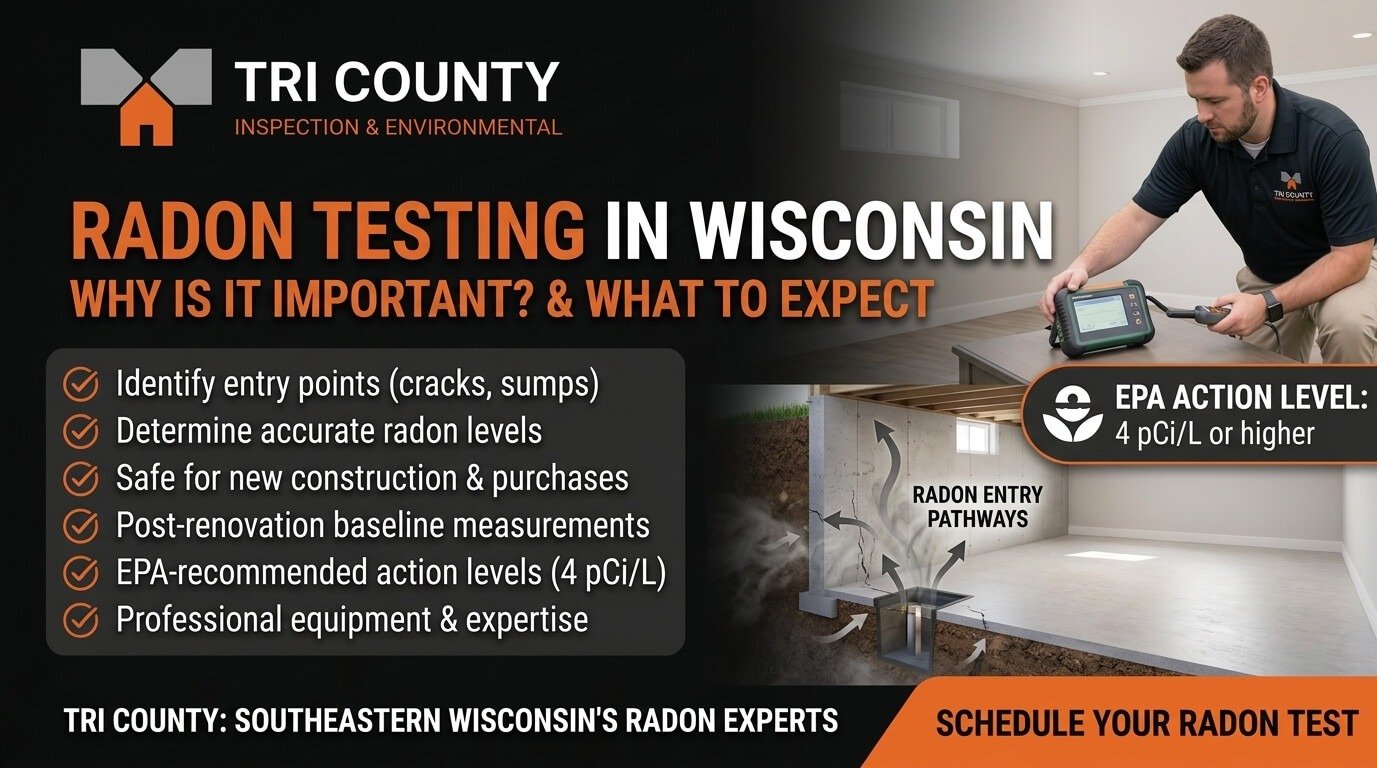
Radon is a naturally occurring radioactive gas that can enter homes from the ground. Because radon is invisible and odorless, you cannot determine whether a home has elevated radon levels simply by looking at it.
That is why radon testing Wisconsin is an important consideration for homeowners and people buying residential property.
Testing provides actual measurements that can help determine the radon level inside the home.
Tri County Inspection & Environmental provides radon testing services throughout Southeastern Wisconsin.
What Is Radon?
Radon is a naturally occurring radioactive gas produced as uranium in soil and rock breaks down.
Because it is a gas, radon can move through soil and enter buildings through openings and pathways around foundations.
Potential entry points can include:
- Foundation cracks
- Floor drains
- Sump pits
- Gaps around pipes
- Crawl spaces
- Construction joints
- Other openings between the building and surrounding soil
Once inside a building, radon can accumulate.
Why Is Radon Testing Important in Wisconsin?
You cannot see, smell, or taste radon.
A home may look completely normal while still having elevated radon concentrations.
Testing is therefore the practical way to determine the radon level in a property.
Wisconsin homeowners and home buyers should consider testing because radon levels can vary significantly from one property to another.
Even neighboring homes can have different indoor radon concentrations.
When Should You Get a Radon Test?
There are several situations when radon testing Wisconsin may be appropriate.
1. When Buying a Home
If you’re purchasing a property, consider testing during the inspection period.
Testing early gives you time to receive the results and discuss them with your appropriate professionals before contractual deadlines.
2. When Buying a Newly Built Home
New construction does not automatically mean a property has low radon levels.
The only way to determine the indoor radon concentration is to test.
3. After Renovations
Major renovations can change airflow and ventilation patterns inside a property.
If you have completed significant work, consider whether additional testing is appropriate.
4. If You Have Never Tested
If you have never tested your home for radon, testing can provide useful baseline information.
How Does Radon Testing Work?
A radon test uses specialized equipment to measure radon concentration over a specific period.
The equipment is placed in an appropriate location within the home according to testing requirements.
During the test period, occupants may need to follow certain conditions to avoid affecting the accuracy of the measurement.
After testing is complete, the results are reviewed and reported.
The specific testing method and duration depend on the type of test being performed.
How Long Does Radon Testing Take?
The testing period depends on the testing method.
Short-term radon tests are designed to measure radon over a relatively short period, while other testing approaches may involve longer monitoring.
Your testing professional can explain the appropriate method for your property and circumstances.
What Radon Level Is Considered High?
Radon results are commonly reported in picocuries per liter (pCi/L).
The U.S. Environmental Protection Agency recommends taking action to reduce radon when indoor levels are at or above 4 pCi/L, and recommends considering mitigation when levels are between 2 and 4 pCi/L.
Because radon guidance can change, link this section to the current authoritative EPA guidance rather than relying solely on an old statistic.
Can You Tell If a House Has Radon Without Testing?
No. Radon is colorless and odorless, so visual inspection cannot determine whether a home has elevated radon.
A home inspection can identify visible conditions around the property, but radon testing is required to measure indoor radon concentration.
Should You Test for Radon During a Home Inspection?
Radon testing can be performed alongside a home inspection as an additional service.
For home buyers, combining services can make the inspection process more convenient and provide additional information about the property.
What Happens If a Radon Test Shows Elevated Levels?
An elevated test result does not mean you should panic.
The appropriate next step depends on the test result, property conditions, and professional recommendations.
A qualified radon mitigation professional can evaluate the property and recommend an appropriate mitigation approach when necessary.
The purpose of testing is to identify the condition so that informed decisions can be made.
Does Every Home in Wisconsin Have Radon?
No two properties are exactly alike.
Radon levels can vary based on geology, soil conditions, foundation construction, ventilation, pressure differences, and other factors.
That is why assumptions based on neighboring properties are not a substitute for testing.
How Often Should You Test for Radon?
Testing frequency depends on the property and circumstances.
Homeowners should follow current EPA and Wisconsin guidance and consider retesting after significant changes to the home or when recommended by an appropriate professional.
Quick Answer: Why Is Radon Testing Important in Wisconsin?
Radon testing Wisconsin is important because radon is an invisible and odorless radioactive gas that can accumulate indoors. Testing measures the actual radon concentration inside a property and helps homeowners and buyers determine whether further action may be appropriate.
Frequently Asked Questions
1. What is radon?
Radon is a naturally occurring radioactive gas produced by the breakdown of uranium in soil and rock. It can enter buildings through openings and pathways around foundations.
2. Should I get a radon test when buying a house?
Yes, radon testing can provide useful information about the property’s indoor radon concentration before you complete your purchase.
3. Can you smell radon?
No. Radon is colorless and odorless, which means testing is required to measure its concentration.
4. What is the EPA action level for radon?
The EPA recommends taking action to reduce radon when indoor levels are at or above 4 pCi/L.
5. How long does radon testing take?
Testing duration depends on the testing method. Your testing professional can explain the appropriate test and duration for your property.
6. What happens if my radon test is high?
If testing indicates elevated radon levels, a qualified radon mitigation professional can evaluate the property and recommend appropriate next steps.
Schedule Radon Testing in Wisconsin
Don’t guess about your home’s radon level.
Professional testing can provide actual measurements and help you make informed decisions about your property.
Tri County Inspection & Environmental provides radon testing throughout Southeastern Wisconsin.
Contact Tri County Inspection & Environmental to schedule your radon test.