
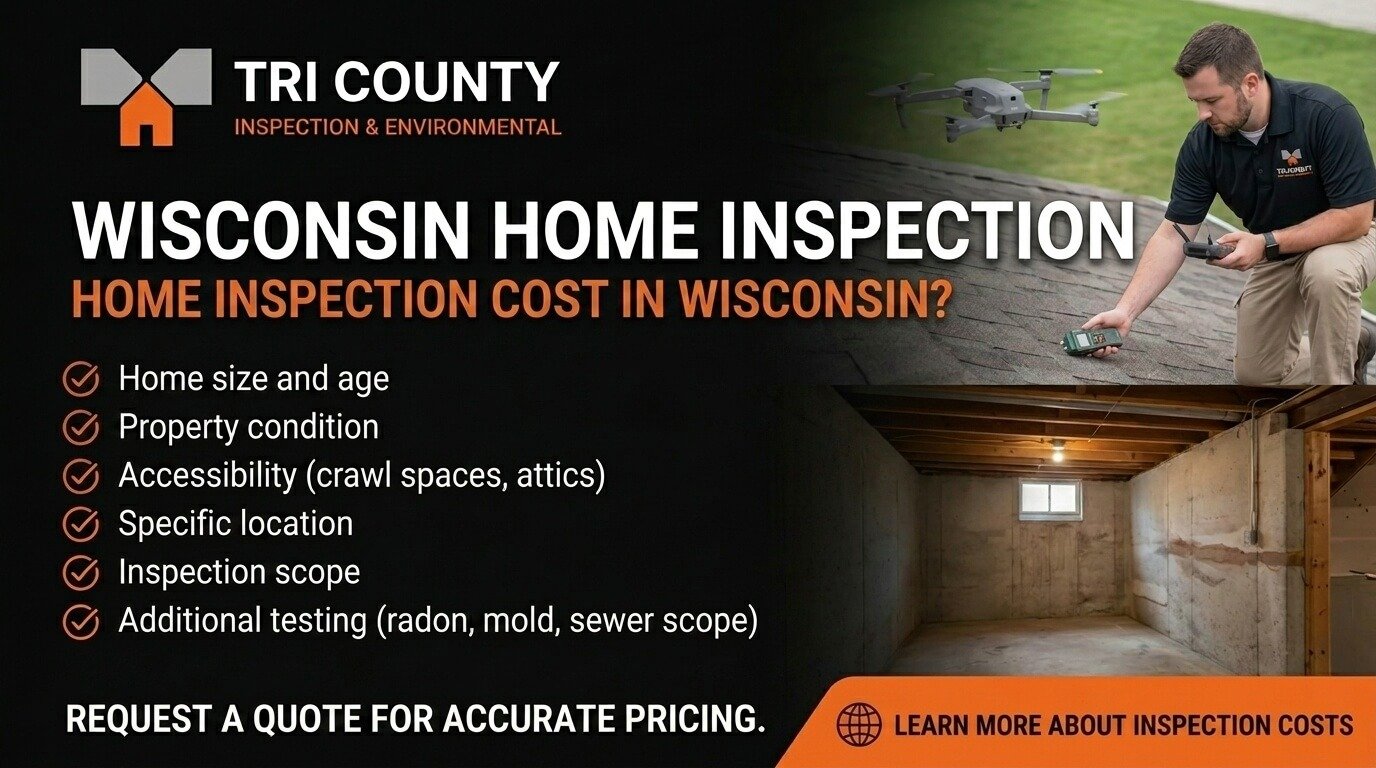
Buying a home is a major investment, and understanding the home inspection cost in Wisconsin can help you plan your purchasing budget.
Home inspection costs vary based on several factors, including the property’s size and age, condition, accessibility, location, and the type of inspection services you need.
A professional home inspection gives buyers a chance to learn more about a property’s condition before completing their purchase.
At Tri County Inspection & Environmental, home inspection services are available throughout Southeastern Wisconsin, with additional environmental and specialty testing available when appropriate.
How Much Does a Home Inspection Cost in Wisconsin?
There isn’t one universal price for every Wisconsin home inspection.
Inspection companies may calculate their fees differently, and the final price can depend on the property and the services requested.
Some of the factors that can affect the Wisconsin home inspection cost include:
- Size of the home
- Age of the property
- Property condition
- Foundation type
- Crawl spaces
- Finished or unfinished basements
- Accessibility
- Location
- Inspection scope
- Additional testing services
The best way to determine the cost for a specific property is to request a quote based on the actual home and services required.
What Factors Affect Home Inspection Cost?
1. Size of the Home
Larger homes generally require more time to inspect because there are more rooms, systems, and components to evaluate.
An inspector may need additional time to examine the property’s accessible areas and document findings.
2. Age of the Property
Older homes may contain aging systems, materials, additions, or construction methods that require closer evaluation.
Age alone doesn’t determine the condition of a property, but it can influence the scope and time required for an inspection.
3. Condition of the Property
A property with visible deterioration, deferred maintenance, moisture concerns, or other issues may require more time to document and evaluate.
4. Accessibility
Inspectors can only evaluate areas that are safely and reasonably accessible.
Crawl spaces, attics, basements, garages, detached structures, and other areas may affect the amount of time required.
What Is Included in a Standard Home Inspection?
A standard inspection generally evaluates readily accessible components of the property.
Depending on the property, the inspection may include:
- Roofing
- Exterior
- Foundation and structure
- Drainage and grading
- Electrical systems
- Plumbing systems
- Heating systems
- Cooling systems
- Interior areas
- Windows and doors
- Attic
- Basement
- Crawl spaces
- Garage
The purpose is to identify visible defects, safety concerns, maintenance issues, and conditions that may require further evaluation.
Are Additional Inspection Services Included?
Not always. Some services are separate from a standard home inspection because they require specialized equipment, sampling, laboratory analysis, or additional inspection procedures.
Depending on the property, buyers may consider:
1. Radon Testing
Radon testing measures the level of radon gas inside a property.
Radon cannot be detected by sight or smell, so testing is necessary to determine whether elevated levels are present.
2. Mold Testing
Mold-related concerns may require additional evaluation or mold testing depending on the situation.
If there are visible concerns, moisture problems, or other indicators, specialized mold services may be appropriate.
3. Sewer Scope Inspection
A sewer scope uses a camera to examine accessible portions of a sewer line.
It can help identify visible concerns such as root intrusion, breaks, cracks, blockages, or deterioration.
Is a Cheap Home Inspection Better?
Not necessarily. When comparing inspection companies, price should be only one factor.
You should also consider:
- Inspector qualifications
- Inspection scope
- Reporting quality
- Experience
- Communication
- Availability
- Additional services
- Customer reviews
A lower price does not automatically mean better value.
The goal should be to find a qualified inspector who provides a thorough and understandable assessment of the property.
What Should You Look for in a Wisconsin Home Inspector?
When choosing a Wisconsin home inspector, consider whether the inspector:
- Clearly explains the inspection process
- Provides detailed reports
- Uses photographs to document findings
- Communicates important concerns clearly
- Answers questions
- Has relevant professional qualifications
- Offers appropriate additional testing
- Has positive customer feedback
You should also confirm exactly what is included in the inspection before scheduling.
Are Home Inspections Worth the Cost?
For many buyers, a professional inspection can be a valuable investment.
A home inspection may identify conditions that aren’t obvious during a typical property showing.
Examples include:
- Roof concerns
- Electrical defects
- Plumbing leaks
- Drainage problems
- Foundation concerns
- HVAC issues
- Moisture problems
- Safety concerns
The inspection does not guarantee that every defect will be discovered.
Instead, it provides information that can help you understand the property’s observable condition before moving forward.
When Should You Schedule a Home Inspection?
In most transactions, buyers schedule an inspection after their offer has been accepted and during the inspection period specified in the purchase agreement.
Schedule as early as practical within that period.
This gives you enough time to:
- Attend the inspection
- Review the report
- Ask questions
- Obtain additional evaluations
- Discuss significant findings with your real estate professional
How Can You Get an Accurate Home Inspection Price?
The most reliable way to determine the cost of an inspection is to request a quote based on your specific property.
Provide the inspector with information such as:
- Property address
- Approximate square footage
- Property type
- Construction year
- Number of stories
- Basement or crawl space information
- Basement or crawl space information
This allows the inspection company to determine the appropriate scope and provide more accurate pricing.
Quick Answer: How Much Does a Home Inspection Cost in Wisconsin?
The home inspection cost in Wisconsin varies depending on the property’s size, age, condition, accessibility, location, and inspection scope. Additional services such as radon testing, mold testing, or sewer scope inspections may have separate fees. The best way to determine the exact price is to request a property-specific quote.
Frequently Asked Questions
1. How much does a home inspection cost in Wisconsin?
Home inspection pricing varies by property and inspection scope. Size, age, condition, accessibility, location, and additional services can all affect the final price.
2. What affects the cost of a home inspection?
Common factors include home size, age, condition, accessibility, property type, location, and the services included.
3. Are radon tests included in a home inspection?
Radon testing is generally a separate service because it requires specialized testing equipment and procedures.
4. Is a sewer scope included with a home inspection?
A sewer scope is generally an additional inspection service using a specialized camera to evaluate the sewer line.
5. Is a home inspection worth the cost?
For many buyers, an inspection provides valuable information about the observable condition of the property and can identify issues that may not be obvious during a showing.
6. How do I get an accurate inspection price?
Contact the inspection company with the property’s address, size, age, type, and any additional services you are considering.
Schedule Your Wisconsin Home Inspection
Buying a home is a significant investment. A professional inspection can give you useful information about the property’s condition before you move forward.
Tri County Inspection & Environmental provides home inspection and environmental testing services throughout Southeastern Wisconsin.
Ready to schedule your inspection? Contact Tri County Inspection & Environmental today.